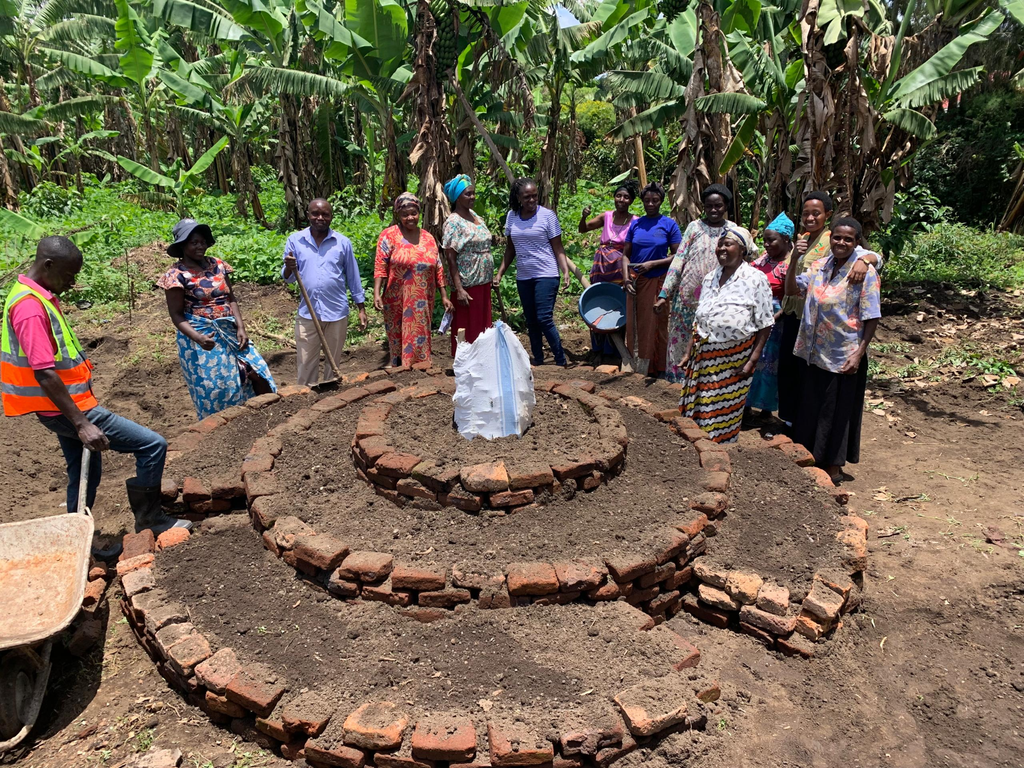
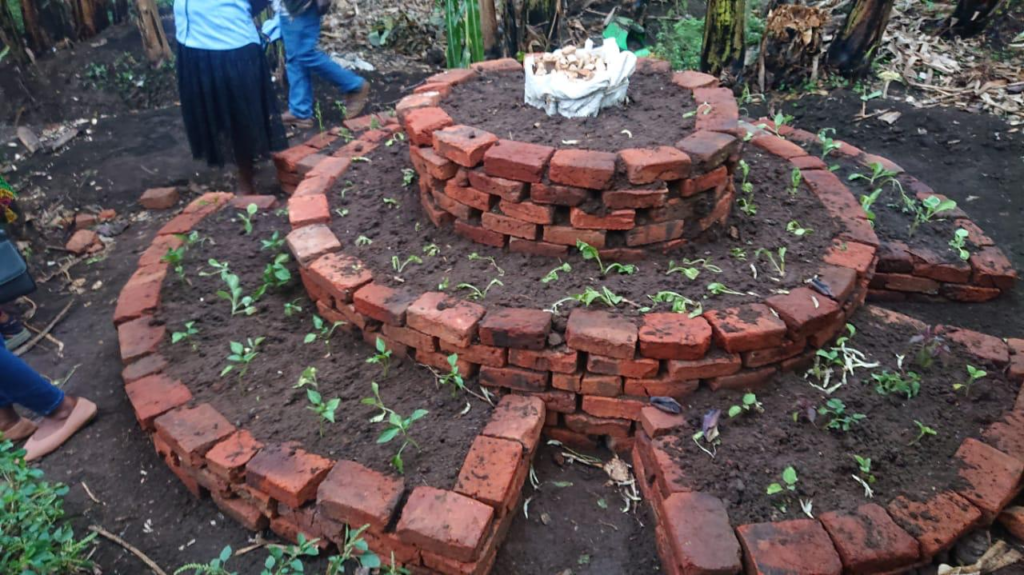
Women participating in REST-Africa’s THRIVE+ flagship project have constructed a communal brick keyhole garden in Ibonde, Fort Portal City. The hands-on training builds on their earlier work establishing a horticultural nursery and introduces a practical space for growing vegetables after seedlings are ready for transplanting.
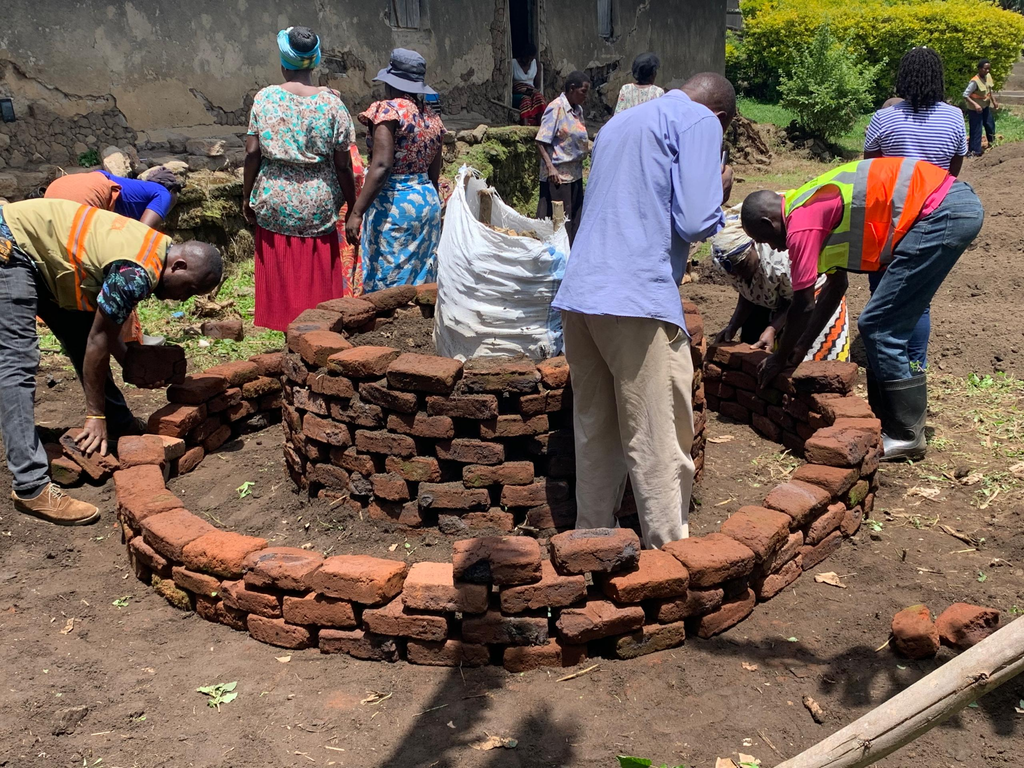
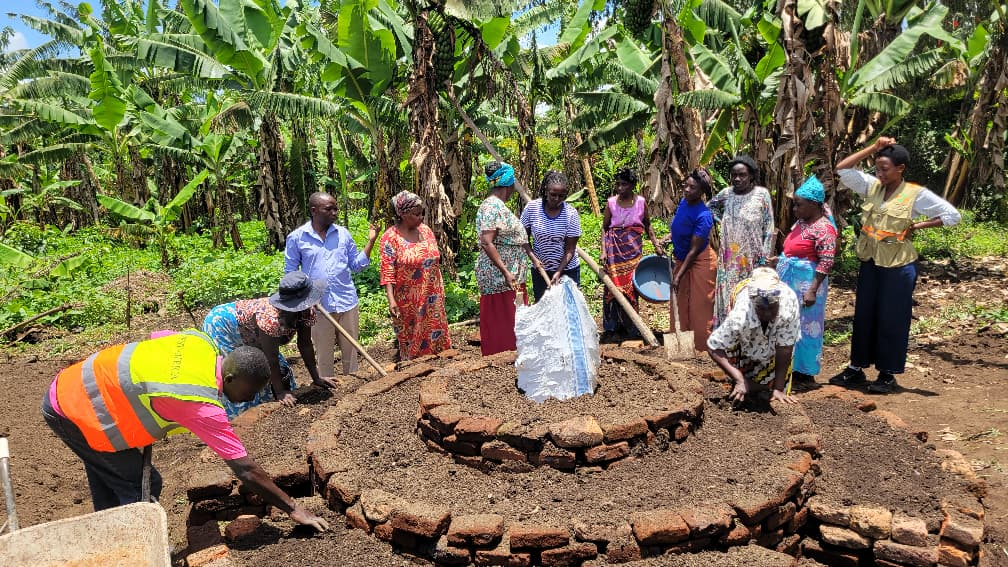
During the session, participants worked together to arrange the bricks, prepare the planting area and establish the garden’s central basket. The completed structure provides a demonstration that the women can observe and manage as they learn how to grow different vegetables in a compact space.
A keyhole garden is designed to make productive use of limited land. Its raised planting area places crops within easy reach, while the central basket can receive organic material and water as part of garden management. The brick structure helps define and retain the planting area. With appropriate crop selection and care, the garden can accommodate more than eight types of leafy vegetables and other greens, offering households an opportunity to diversify what they grow.
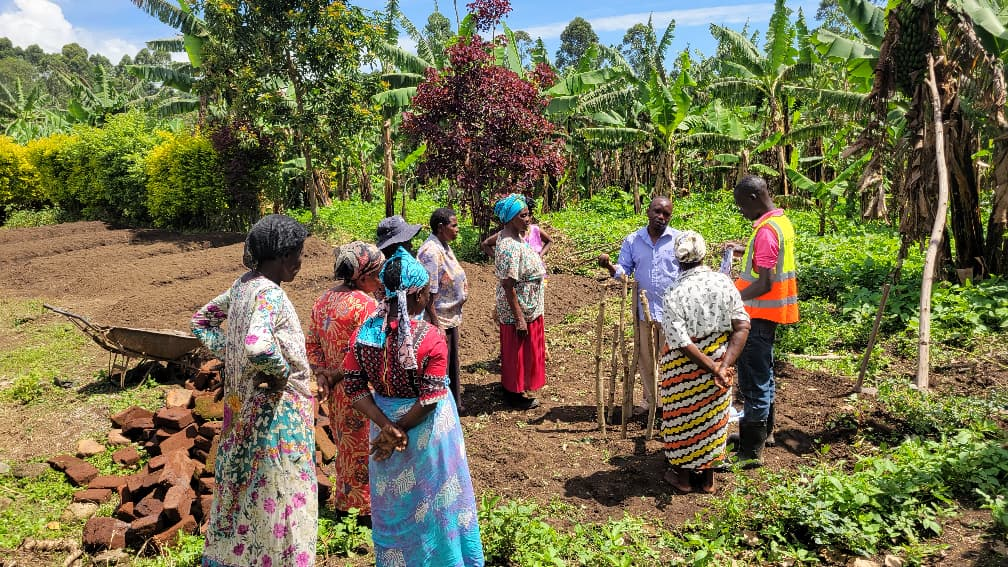
The communal garden is a training site for household replication. THRIVE+ participants are expected to use the skills gained from its construction and management to establish gardens at home, adapting the design to the space and materials available to them. The nursery and garden activities form a connected production cycle: raise healthy seedlings, prepare the growing space, transplant at the appropriate stage, and manage the crops through to harvest.
This work supports two linked household goals. Producing a variety of vegetables can improve access to fresh foods and contribute to more diverse diets. Where production exceeds household needs, women can sell surplus vegetables and use the proceeds to support other household priorities. Building these skills across participating households could also increase the local availability of vegetables in Ibonde.
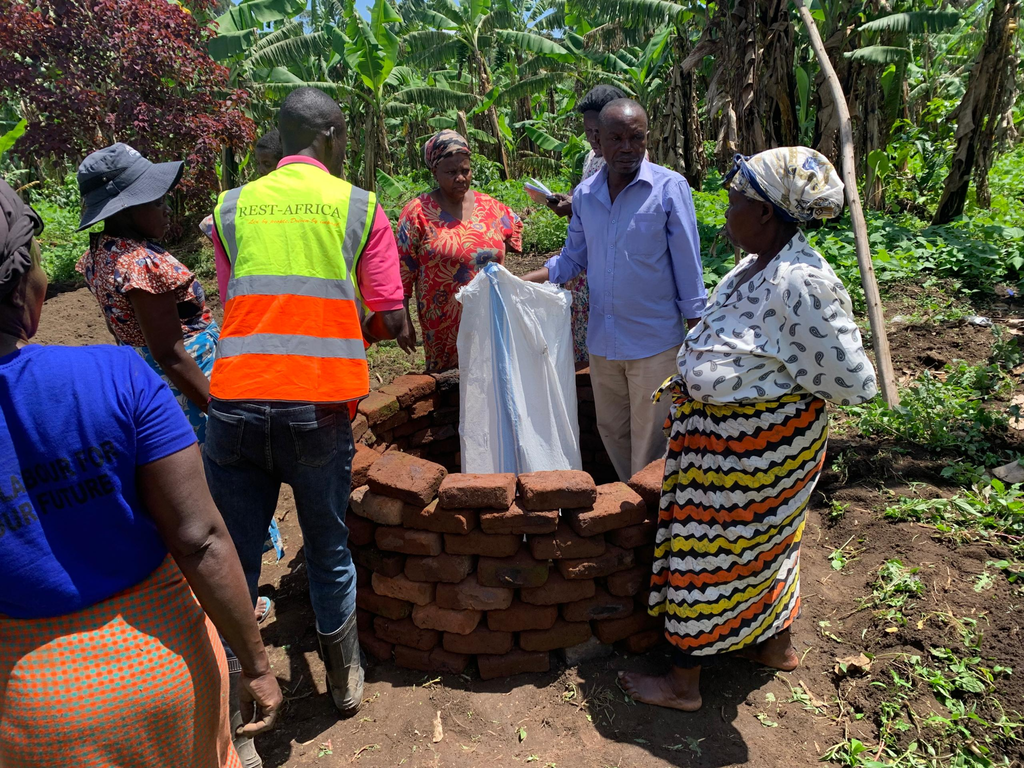
REST-Africa’s approach places women at the centre of the learning process. By constructing and managing the communal garden together, participants gain practical experience, exchange knowledge and create a model they can share with other households in the community.
Through THRIVE+, REST-Africa will continue supporting participants as they care for the nursery seedlings, manage the demonstration garden and apply what they have learned at household level.