
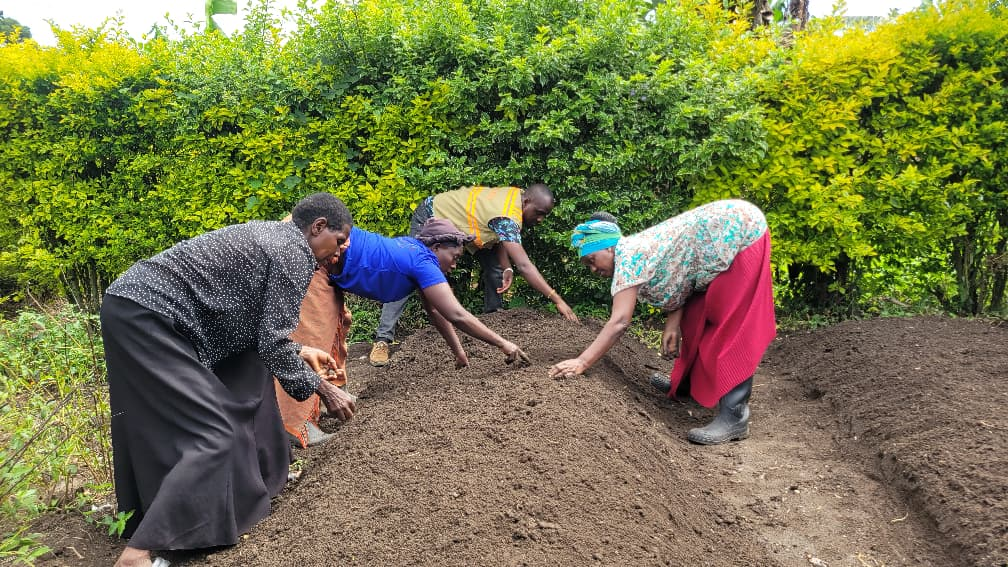
Women participating in REST-Africa’s THRIVE+ flagship project have established a communal horticultural nursery bed in Ibonde, Fort Portal City. The activity is part of the project’s work to strengthen household nutrition and create practical opportunities for women to earn income through vegetable production.
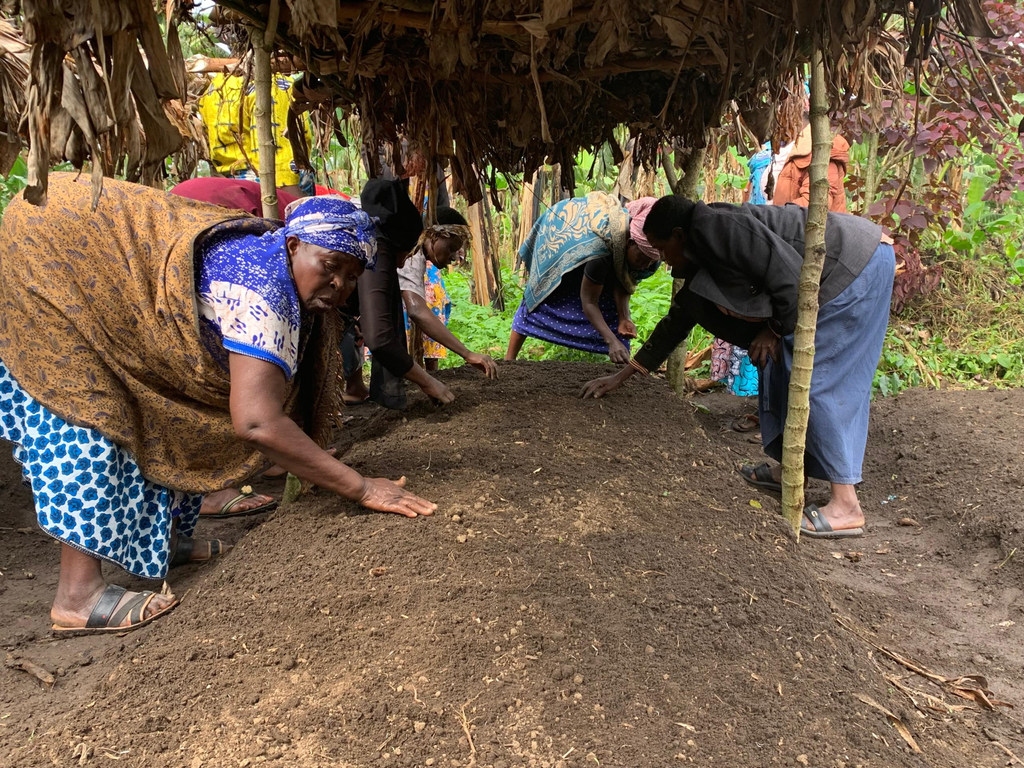
The communal nursery serves as a hands-on training site. During the session, participants prepared the site and soil, formed nursery beds and practised the steps involved in raising horticultural seedlings. Working at one shared site allowed the women to learn together, observe each stage of nursery establishment and build the confidence to apply the same methods at household level.
A well-managed nursery is the starting point for reliable vegetable production. It gives growers a dedicated space to raise seedlings, monitor their development and prepare them for transplanting. Through THRIVE+, participants are learning to connect this first stage of production with the establishment and management of household kitchen gardens.
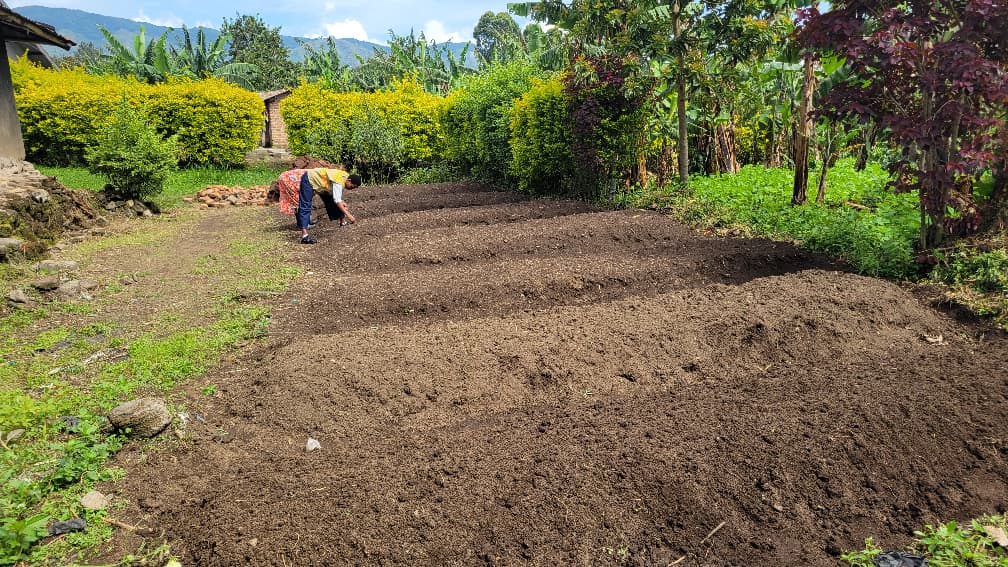
The communal nursery is a demonstration, not the final destination. REST-Africa expects participating women to replicate the skills at home by establishing their own nursery beds and growing vegetables suited to their available space and household priorities. The project is also introducing brick keyhole gardens as one option for cultivating a range of vegetables after the seedlings are ready for transplanting.
This approach links nutrition and livelihoods. Vegetables grown at household level can contribute to more diverse meals, while surplus produce may be sold to generate income. As participants strengthen their production skills, THRIVE+ aims to help households make more consistent use of available land, improve access to fresh vegetables and explore small-scale market opportunities.
The wider value of the communal training lies in what participants take back to their homes and share with others. When women apply and exchange these skills across Ibonde, the learning can extend beyond the initial group and contribute to stronger local food production.
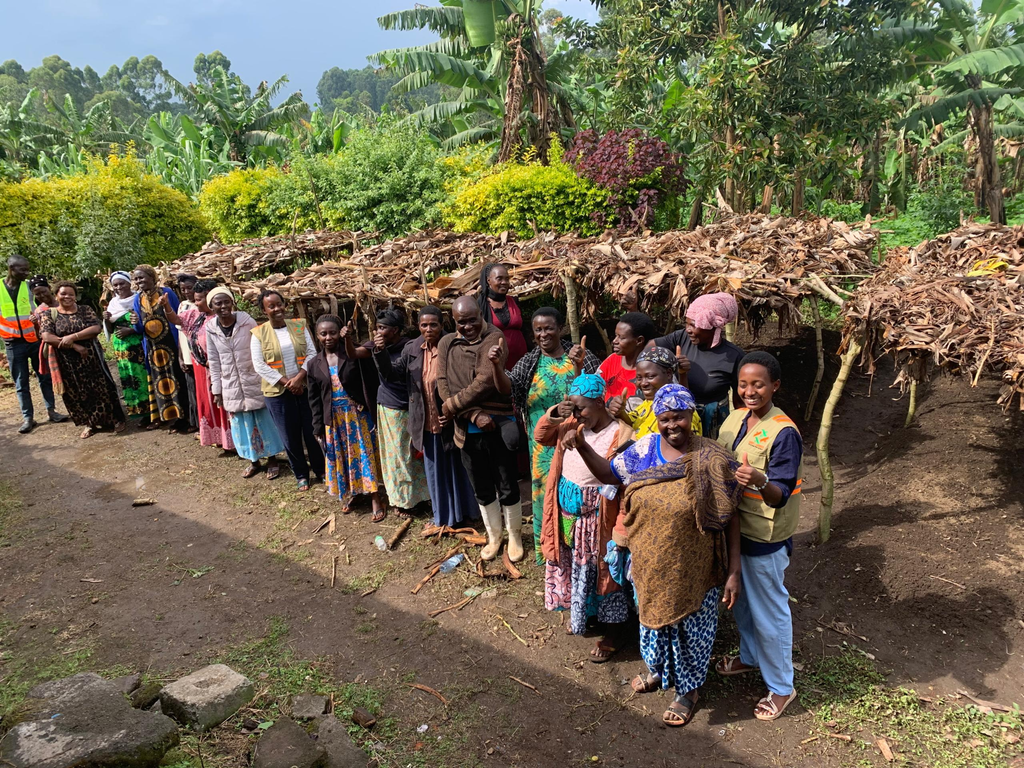
REST-Africa will continue supporting the women through the next stages of the growing cycle, including preparation of brick keyhole gardens and the eventual transplanting and care of seedlings. The keyhole garden training will be featured in our next THRIVE+ article.