Promoting environmental conservation, sustainable household energy and women’s economic empowerment through community-led innovation in Fort Portal City.
Fort Portal City, Uganda | 30 October 2026
As Uganda advances efforts to reduce dependence on traditional charcoal and firewood, Responsive Action for Equitable and Sustainable Transformation–Africa (REST-Africa) is empowering grassroots communities to embrace environmentally responsible alternatives that also create opportunities for economic resilience.
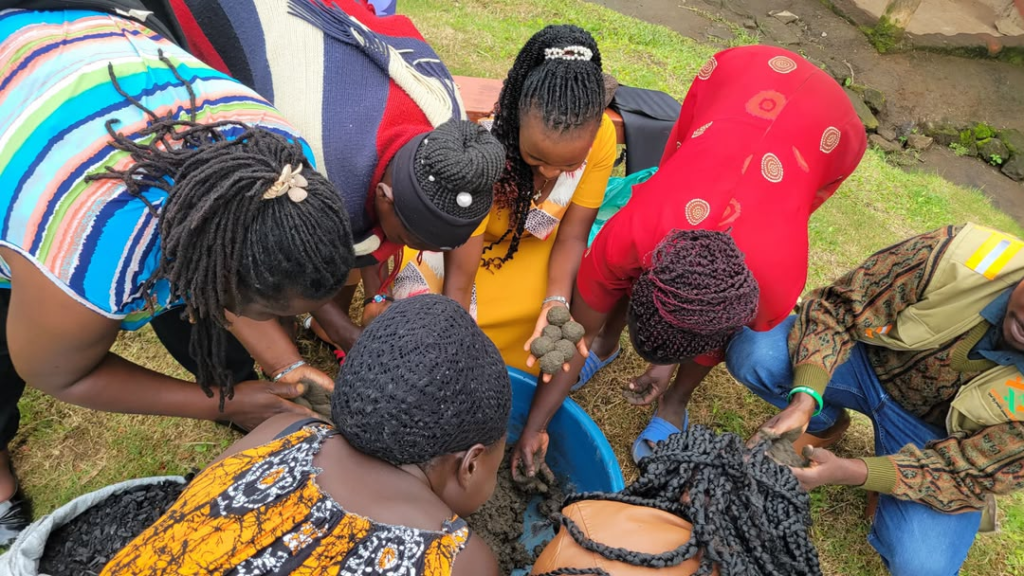
This week, REST-Africa conducted hands-on briquette-making training for women participating in its THRIVE+ initiative in Ibonde Parish, Fort Portal City North Division. The practical session equipped participants with skills to transform locally available materials into alternative cooking fuel, demonstrating how community-driven innovation can contribute to environmental conservation, household energy security and sustainable livelihoods.
Responding to Uganda’s Environmental and Energy Challenges
Uganda’s heavy reliance on traditional biomass fuels continues to place significant pressure on forests, natural ecosystems and household resources. The country’s National Integrated Clean Cooking Strategy identifies wood and charcoal as the primary cooking fuels for approximately 93% of households, highlighting the urgent need for affordable and sustainable alternatives.
Government measures restricting charcoal production and trade in parts of Uganda, alongside ongoing policy discussions about their implementation, have further underscored the importance of accelerating the transition towards sustainable household energy.
For communities where charcoal and firewood remain essential cooking fuels, this transition requires practical, affordable and locally accessible solutions.
REST-Africa is responding to this challenge by placing women at the centre of community-based environmental innovation, enabling them to participate directly in developing alternative energy solutions while strengthening their economic capabilities.
Transforming Locally Available Materials into Valuable Energy Resources
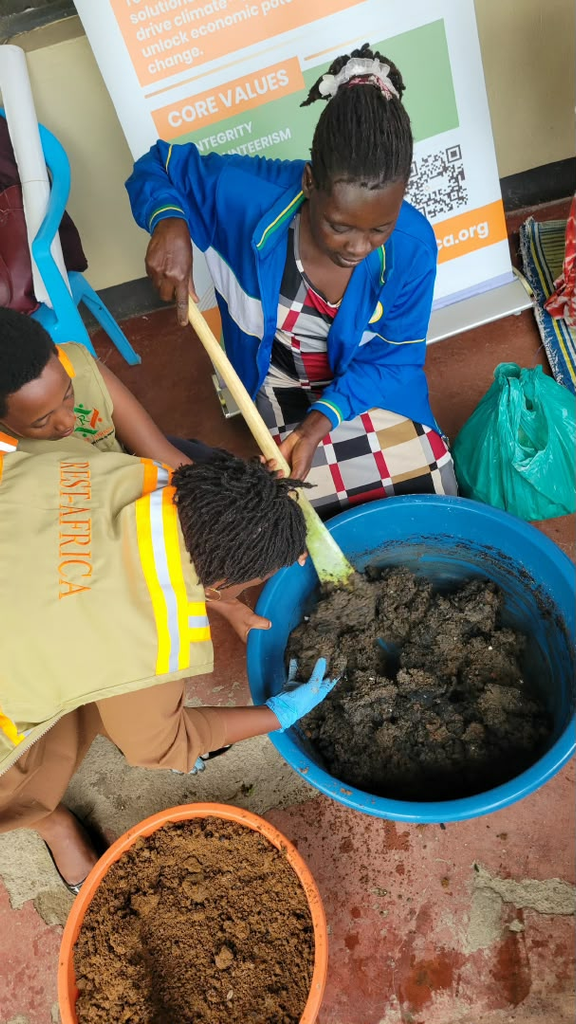
During the training, women participated in practical demonstrations covering material preparation, mixing, binding and hand-moulding of briquettes.
Using locally available materials, including cassava flour as a binding agent and suitable biomass residues, participants learned how waste-derived materials can be processed into compact fuel blocks for cooking.
The photographs from the training demonstrate an engaging, participatory learning process, with women working collaboratively to prepare mixtures, mould briquettes and examine the finished products.
This approach promotes the principles of a circular economy, where suitable waste materials are recovered and converted into valuable products rather than discarded.
Beyond acquiring technical skills, participants gained an understanding of how alternative fuel production can contribute to reducing dependence on conventional wood charcoal and potentially create new household income opportunities.
Why Briquettes Matter for Environmental Protection and Household Livelihoods
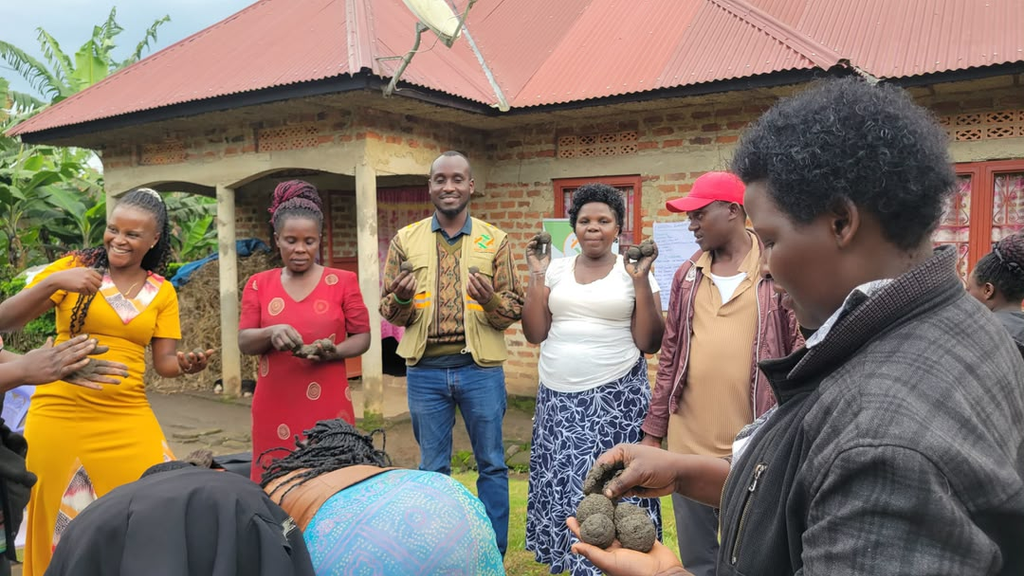
Briquette production offers several potential environmental and socioeconomic benefits when appropriate materials and production practices are used.
Environmental conservation: Briquettes manufactured from sustainably sourced agricultural residues and recovered biomass can help reduce demand for wood-derived charcoal, easing pressure on forests and contributing to natural resource conservation.
Affordable household energy: Locally produced briquettes may provide a cost-effective cooking alternative, particularly where raw materials are readily available. Their affordability and cooking performance depend on production quality, stove efficiency and prevailing fuel prices.
Waste-to-resource innovation: Converting suitable organic residues into usable fuel promotes responsible resource utilisation and reduces avoidable waste.
Women’s economic empowerment: Briquette production presents opportunities for women to develop small-scale enterprises, diversify household income and participate in emerging markets for alternative cooking fuels.
While biomass briquettes are not inherently smoke-free or equivalent to modern clean cooking technologies, appropriate production methods, efficient stoves and adequate ventilation can support safer and more effective use.
THRIVE+: Integrating Climate Action with Women’s Economic Empowerment
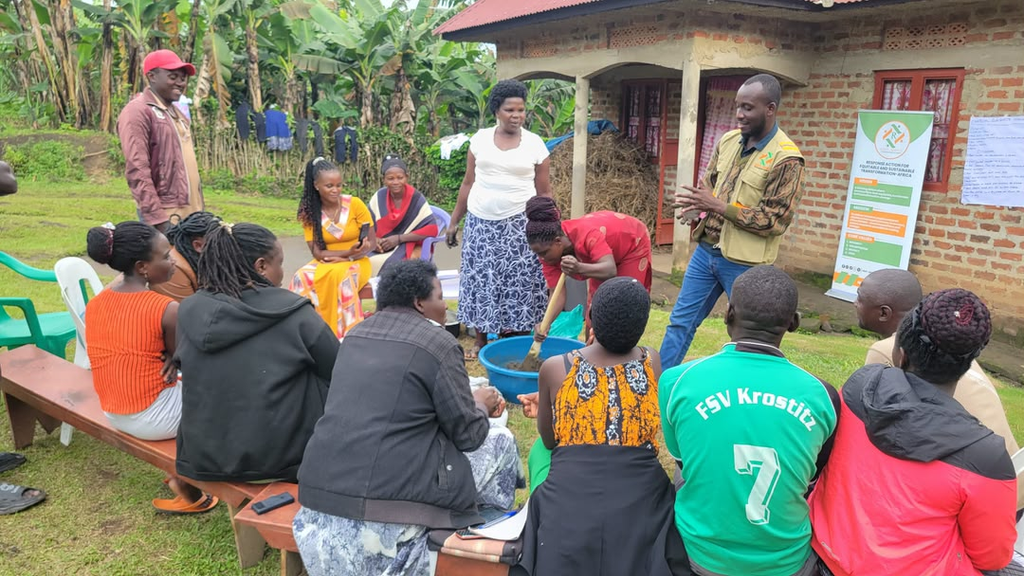
The briquette-making training forms part of REST-Africa’s THRIVE+ initiative, a grassroots programme supporting four women’s groups comprising approximately 80 women in Ibonde Parish.
The initiative integrates practical livelihood development with environmental sustainability, household resilience and community empowerment.
Through complementary interventions such as horticultural nursery establishment, keyhole gardening, liquid soap production and briquette-making, REST-Africa is strengthening women’s capacity to utilise locally available resources productively and develop sustainable livelihood opportunities.
Rather than treating environmental conservation and economic empowerment as separate development priorities, THRIVE+ brings them together through practical, community-owned solutions.
This intervention contributes to Uganda’s sustainable energy transition while advancing the Sustainable Development Goals, particularly SDG 5 (Gender Equality), SDG 7 (Affordable and Clean Energy), SDG 8 (Decent Work and Economic Growth), SDG 12 (Responsible Consumption and Production), SDG 13 (Climate Action) and SDG 15 (Life on Land).
Building Skills Today for Greener and More Resilient Communities
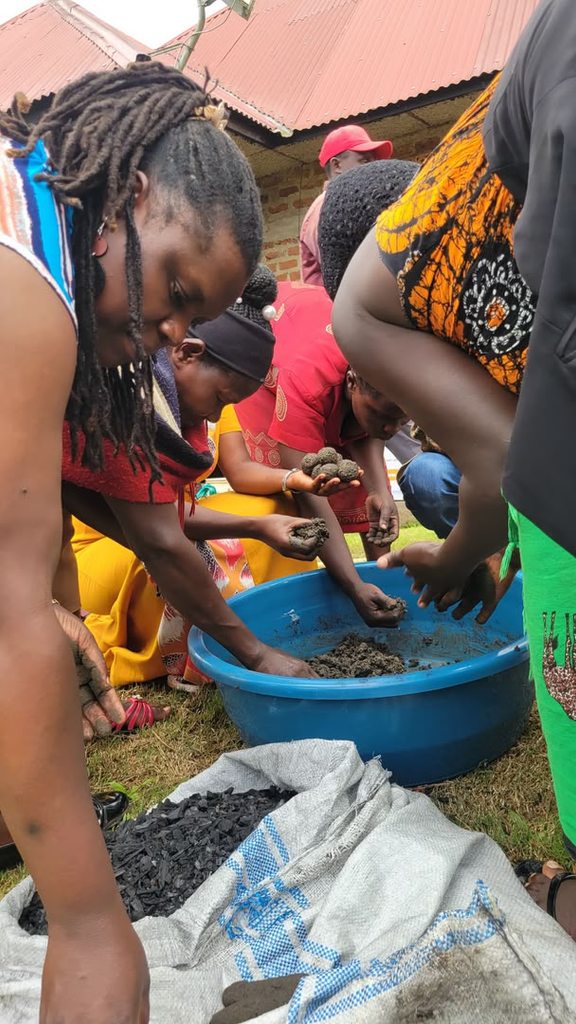
For REST-Africa, briquette-making represents more than a one-day practical training. It is an opportunity to strengthen community knowledge, encourage environmentally responsible household practices and lay the foundation for potential women-led green enterprises.
The organisation will continue promoting practical skills development, sustainable resource management and locally appropriate livelihood innovations that enable women to become active agents of environmental and economic transformation.
As Uganda works towards more sustainable household energy systems, initiatives such as THRIVE+ demonstrate the important contribution grassroots communities can make when equipped with relevant knowledge, practical skills and opportunities.
By transforming locally available materials into useful energy resources, women are demonstrating that meaningful climate action can begin at the household and community level.
At REST-Africa, we believe that sustainable transformation begins when communities are empowered to develop solutions to the challenges they face.
Empowering Women. Transforming Waste. Protecting Our Environment. Building Resilient Communities.
REST-Africa | Responsive Action for Equitable and Sustainable Transformation–Africa
Fort Portal City, Uganda | www.rest-africa.org